You're trying to furnish a dining room that has to work on an ordinary weeknight and still welcome a full gathering. A compact round table may feel perfect for daily meals, yet become frustrating when extra guests arrive. A round dining table with extension leaves solves that conflict without asking the room to carry a permanently oversized table.
The decision deserves more attention than color and diameter. The extension mechanism, support structure, leaf storage, finish, and room clearances determine whether the table remains pleasant to use years after delivery. A well-built piece can become an investment piece that serves changing households instead of being replaced whenever hosting needs change.
Why a Round Dining Table With Extension Leaves Earns Its Place
A household with a 42-inch round table may enjoy comfortable everyday meals, yet find holiday hosting difficult. The table suits the room when four people sit down, but it can't provide enough surface for serving dishes, additional place settings, and comfortable elbow room when guests arrive. Buying a permanently larger table would solve the holiday problem while making everyday circulation tighter.
The round extension design offers a better compromise. It keeps an intimate footprint for ordinary meals, then changes into an oval or a larger dining surface when the occasion calls for it. A round top also keeps diners visually connected, with no person stranded at the far end. That conversational quality matters more than many shoppers expect until they compare the experience in person.

The everyday footprint matters most
The smartest starting point is the table's compact configuration, not its maximum size. A table that feels right for daily life will earn regular use, while a table selected only for occasional entertaining may dominate the room for most of the year.
Round tables also eliminate sharp corners, which helps traffic move through smaller dining areas. A pedestal base can improve leg placement further, although the base must remain stable as the top expands.
The design has a long history. The draw table appeared in the 16th century, the butterfly drop-leaf innovation emerged in the late 17th century, and standard expansion tables became dominant by the 19th century, according to this history of expanding tables. Antoine-Joseph Loriot received credit for an expandable round tabletop in 1764, showing that this isn't a passing furniture trend.
A practical answer to changing households
The market reflects continuing interest in adaptable dining furniture. One estimate places the extending table market at about USD 3.5 billion in 2023, with a projection of USD 6.1 billion by 2033 and a 5.3% CAGR over the forecast period, while another estimates USD 3,409 million in 2024 and projects USD 4,529 million by 2031 at a 4.2% CAGR. These are separate market estimates, but both point to sustained demand for flexible dining solutions, as documented by the extending table market analysis.
For homeowners, the conclusion is simpler. Buy the compact size that supports everyday life, then demand an extension system that handles occasional capacity without wobble, awkward storage, or excessive visual compromise. More guidance on balancing size and function appears in this dining room furnishing guide.
How Extension Mechanisms Actually Work
A round extension table can look simple from above, but the hardware underneath carries the responsibility. The top must separate cleanly, accept the leaf without a ridge, and return to a stable round shape when closed. Buyers should operate the mechanism themselves rather than relying on a product photograph.
Butterfly leaves
A butterfly leaf folds at its center and stores inside the table's apron or under-top cavity. When the tabletop halves move apart, the folded panel is pulled into position, opened, and locked. This design keeps the leaf with the table and avoids a separate storage problem.
The convenience is excellent for households that extend the table without assistance. The trade-off is a visible center seam and a hinge that becomes a wear point over time. The leaf may also create a more compact oval than a separate-leaf system. Buyers who prioritize easy daily operation should look for smooth movement, positive locks, and a leaf that sits flush rather than relying on appearance alone.

Split tops and separate leaves
A split-top system slides two halves apart on runners, leaving a central opening for one or more removable leaves. The additional parts can create a longer oval and may allow more flexibility in the expanded size. Separate leaves also offer an opportunity for careful grain matching across the opening.
This format usually needs more storage planning. Round tops generally can't hold removable leaves beneath the table, so buyers may need a dedicated, dry storage location unless the design includes an integrated cabinet or another storage solution. A guide to tables with leaves stored in the table helps clarify which designs retain their leaves internally.
Self-storing rail systems
Some tables use a cavity beneath the top, with leaves riding on rails or folding into position. The mechanism adds weight and complexity, but it keeps the components together and helps the wood remain in the same household environment. Self-storing butterfly or draw-leaf designs typically provide a smaller maximum extension of about 40 to 50 centimeters, as explained in this guide to extending dining table mechanisms.
Practical rule: The first failure point is rarely the tabletop finish. It's usually neglected hardware, incomplete locks, misalignment, or inadequate support.
Engineering guidance identifies central-extension and butterfly-style systems as typical for round tables, often paired with fixed legs. Precision slides, locks, supplemental braces, and extra support at maximum extension help distribute weight and reduce racking or wobble, according to this extension-system overview. A showroom consultant should demonstrate the table both closed and fully open, including how many people are needed to operate it.
Sizing, Seating Capacity, and Room Fit
The correct diameter depends on everyday use, chair width, and circulation. A 42-inch round table is a useful compact example for four diners, but the expanded form changes both seating and room demands. A 48-inch table offers a more generous daily surface, yet its extended length may require a different furniture layout.
Leaf width creates the change. Dining leaves commonly measure about 2 feet, or 0.6 meters, wide, so every insert affects the table's overall footprint and chair clearance, as noted in this explanation of dining-table leaf systems.
| Round Extension Table Sizing Reference | Base Diameter | Leaves Added | Extended Size | Seats Comfortably |
|---|---|---|---|---|
| Compact example | 42 inches | One 20-inch leaf | 62 inches long | Four to six, depending on chair width |
| Standard example | 48 inches | One 18-inch leaf | 66 inches long | Flexible family seating |
| Standard example | 48 inches | Two 18-inch leaves | 84 inches long | Larger gatherings, with suitable clearance |
| Custom example | 48 inches | One 12-inch leaf | 48 by 60 inches oval | Expanded everyday flexibility |
| Custom example | 60 inches | One 12-inch leaf | 60 by 72 inches oval | More generous expanded seating |
The concrete examples show why a buyer shouldn't judge capacity from diameter alone. A 42-inch table with one 20-inch skirted leaf becomes 62 inches long, while a 48-inch version with two such leaves reaches 88 inches, according to this round extension table example. Another listing shows a 48-inch diameter changing to 66 inches with one 18-inch leaf and 84 inches with two, with leaves that aren't self-storing, as detailed in this standard round extension table listing.
Measure the expanded footprint
A table needs at least 36 inches of clearance from its edge to walls or other furniture for chair pull-back and ordinary passage. Serving circulation behind seated guests works better with 44 inches of preferred clearance, particularly when the table reaches its longest configuration.
The everyday diameter should match the room's normal rhythm. Don't choose a large base because the table can expand further. For more ideas on compact layouts, consult this guide to dining tables for small spaces, then measure the expanded length with painter's tape before ordering.
Materials, Finishes, and How They Age
The top material affects more than appearance. It determines how the table responds to humidity, how visible the extension seam becomes, and what a future repair can accomplish. A showroom consultant should explain those trade-offs directly instead of treating every wood surface as equivalent.
Solid wood offers the strongest refinishing potential. Walnut brings a rich, varied grain and can show scratches depending on its tone and surrounding light. Oak displays pronounced grain and suits both traditional and modern finishes, while maple tends to present a quieter, smoother appearance. Solid wood edges often show wear first, but careful sanding and refinishing can renew them.
High-quality veneer can remain dimensionally stable through humidity changes because its construction controls movement more effectively than a broad solid slab. It still needs careful handling, however, and it can't be sanded indefinitely. If the seam or surface damage reaches through the veneer, repair options become more limited.
Mixed-material tops introduce a different set of decisions. Metal or stone inserts can create a strong design statement, but leaf work may require professional disassembly. The support beneath the material must also remain aligned as the top opens and closes.
| Round Extension Table Top Materials Compared | Durability | Seam Appearance Over Time | Refinishing Potential | Care Demands |
|---|---|---|---|---|
| Solid wood | Strong, with visible edge wear possible | Grain matching can make seams less distracting | High, when enough material remains | Protect from standing moisture and direct abuse |
| Quality veneer | Stable surface construction | Consistent grain can disguise the opening | Limited compared with solid wood | Use gentle cleaning and avoid deep scratches |
| Mixed material | Depends on the combination and hardware | Inserts may emphasize the division | Often requires specialized work | Follow material-specific care instructions |
Finish choice changes maintenance
Oil and hardwax finishes can offer a tactile surface and may permit localized attention to small areas. Lacquer creates a refined film finish, while conversion varnish and catalyzed polyurethane generally provide stronger resistance to moisture rings and everyday wear. The exact formulation and application quality matter more than the label alone.
The finish must also match the household's habits. A busy family may prefer a protective film finish, while a collector of traditional furniture may accept more visible patina in exchange for easier future restoration. The principles behind solid-wood dining tables are useful here, especially the distinction between a surface that can be renewed and one that must eventually be replaced.
Custom Options That Make It Yours
A stock table can be perfectly serviceable. A custom table becomes the smarter long-term investment when the room, chairs, and household habits demand precise choices. Custom ordering isn't about adding decoration for its own sake. It's about preventing compromises that will remain visible every day.
Wood selection creates the first meaningful difference. Figured walnut provides movement and depth, quarter-sawn white oak emphasizes stability and straight grain, rift-sawn cherry offers a refined linear appearance, and distressed reclaimed pine brings a more relaxed character. The extension seam deserves special attention because grain direction can either connect the sections visually or make the opening stand out.
Finish and edge decisions
A custom finish can specify sheen level, stain tone, and even two-tone edge banding. A hand-rubbed oil highlights touch and grain, while sprayed lacquer creates a more uniform film. Neither choice is universally correct. The right finish depends on the desired appearance, maintenance tolerance, and whether the owner values visible aging or a more consistent surface.
Edge profiles also change how the table feels in use. An eased square edge looks restrained, while a hand-scraped bevel adds a crafted detail that catches light around the circular perimeter. The profile should feel comfortable against the forearm, especially because round tables invite diners to sit close to the edge.
Fit the table to the architecture
Stock catalogs rarely solve unusual alcoves or challenging chair arrangements. A non-standard diameter may fit an architectural recess more effectively than a standard size. Apron height can affect chair clearance, and the base can determine whether diners find a comfortable place for their knees.
Custom order services can also coordinate wood species, finishes, fabrics, and leathers across a wider room plan. That matters when the table must relate to upholstered dining chairs, nearby case goods, or a broader Bay Area Interior Design project. A custom wood dining table service can help buyers evaluate matched grain direction, leaf construction, and proportions before the order is finalized.
A subtle seam is a craftsmanship decision, not a cosmetic accident. Grain matching and accurate alignment make the expanded table feel intentional.
Giorgi Bros. Furniture offers custom order services alongside floor models, allowing customers to discuss wood species and finishes with Non-Commission Sales Staff rather than choosing only from what happens to be displayed. That no-pressure guidance supports a buy-it-for-life decision because the table can be specified around the room instead of forced into it.
Measurement and Room Placement Essentials
Delivery problems usually begin before the table leaves the showroom. A homeowner should measure the room, the furniture around it, and the route into the house. The measurements must account for the fully extended table, not just the attractive compact configuration.
Use this placement checklist
Start with the table edge. Allow at least 36 inches from the edge to a wall or furniture for chair pull-back. Prefer 44 inches where people need to serve food or walk behind seated guests.
Map the maximum length. Mark the extended oval on the floor with tape. Include chair depth and the path around the table, then check whether a leaf reaches window trim, sills, cabinetry, or another obstruction.
Size the rug for the chairs. The rug should extend at least 24 inches beyond the table on every side. That keeps chair legs on the rug when diners pull back, including in the expanded configuration.
Plan the overhead fixture. A pendant or chandelier should hang 30 to 36 inches above the table surface, with a diameter roughly half the table's width. The fixture should center over the table's visual midpoint, not necessarily a nearby ceiling junction.
Measure the delivery route. Check doorways, hallway turns, stair corners, elevator openings, and ceiling height. A table that fits the dining room may still fail at a tight landing or narrow turn.

Account for the base and the light
The base matters as much as the top diameter. A central pedestal can free up legroom, while a fixed-leg structure may need careful chair positioning when the table expands. Ask whether the support remains centered, moves with the opening, or needs supplemental support at maximum extension.
Window placement deserves a final check. An oval extension can project farther toward glass, trim, or a sill than a quick diameter measurement suggests. Measuring the compact and extended forms before delivery protects the room's circulation and prevents a beautiful table from becoming an obstruction.
Care, Styling, and the Buy-It-for-Life Mindset
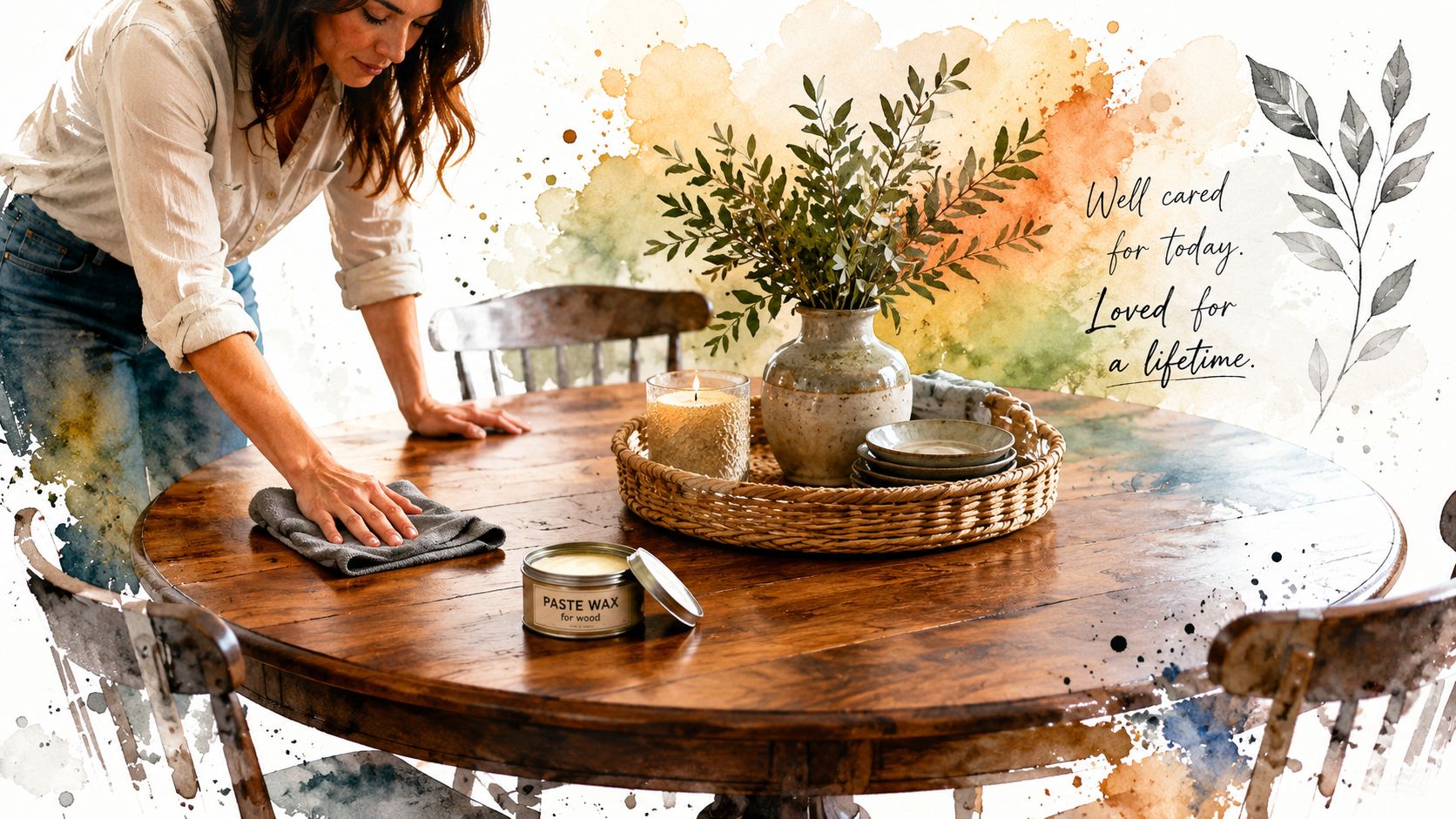
A quality table earns its value through repeated use, not showroom appearance alone. Weekly dusting with a microfiber cloth removes abrasive particles before they can mark the finish. Quarterly conditioning with paste wax or hardwax oil should follow the manufacturer's instructions, especially because different finishes require different products.
Seasonal checks should include the glide hardware, apron joints, locks, and leaf alignment. Open the table gradually, confirm that every lock engages, and avoid placing concentrated weight near an unsupported opening. Extension-table guidance emphasizes that level flooring, fully engaged locks, even weight distribution, and adherence to the manufacturer's maximum weight matter for stability, as explained in this guide to extension-table performance.
Style for both configurations
The table should look considered when closed and remain functional when open. Keep centerpieces low enough to preserve sightlines across the expanded oval. A runner can pivot or be repositioned around the leaf seam, while chairs should remain spaced for the fully expanded arrangement rather than being crowded around the compact top.
Pendant placement deserves consistency with the room plan. The preferred hanging range is 30 to 34 inches above the surface for this styling approach, provided the fixture and ceiling height support it. For candlelight at dinner, a carefully chosen soy wax candle sticks guide can help inform a low, balanced centerpiece without blocking conversation.
Treat the table as an enduring asset
The buy-it-for-life mindset changes the purchasing question. Instead of asking whether the table has the lowest immediate price, ask whether the joinery is sound, the glides are replaceable, the finish can be renewed, and the leaves remain usable after years of movement. A durable table can reduce the need for repeated replacement, conserve materials, and spread the cost of ownership across decades of meals.
Giorgi Bros. Furniture has served South San Francisco for over 90 years, with a family-owned, non-commission environment and a 50,000-square-foot showroom where customers can touch finishes, test mechanisms, and compare floor-model dimensions. The team offers custom furniture, Amish Furniture, flexible financing options, Premium Mattresses, and design consultation without pressure, making an in-person review worthwhile before committing to a mechanism or finish.
Visit the South San Francisco showroom to compare round extension tables, operate the mechanisms, and review wood and finish samples with Giorgi Bros. Furniture's design experts. For personalized help with a dining layout or a custom furniture order, book a Design Consultation through Giorgi Bros. Furniture and choose an investment piece built around the room's real life.