
You're awake at 3 a.m. with the sheets pushed toward the foot of the bed, the pillow flipped to its cool side, and the ceiling fan working overtime. Lowering the thermostat helps the room, but the mattress still feels warm beneath the shoulders and hips. That's the point many shoppers miss: the best mattress for hot sleepers isn't just the softest bed with a “cooling” label. It's the foundation of a sleep microclimate that includes the mattress, base, bedding, and room.
A quality mattress should support comfortable sleep for years, not solve one uncomfortable night and create another problem later. Giorgi Bros. Furniture has served South San Francisco and the wider Bay Area for over 90 years, since 1933, with a family-owned, non-commission approach. The same buy-it-for-life thinking applies to a mattress as it does to Amish Furniture, Custom Furniture, and other investment pieces. Better construction costs less over the long term when it keeps working instead of needing an early replacement.
| Mattress type | Cooling profile | Best fit | Main trade-off |
|---|---|---|---|
| Memory foam | Fair to good when ventilated or specially engineered | Strong contour and motion isolation | Dense foam can hold heat |
| Latex | Naturally breathable and responsive | Sleepers who want buoyancy and airflow | Heavier and often pricier |
| Hybrid | Usually very good because coils create airflow | Hot sleepers who still want pressure relief | More complex construction |
| Innerspring | Coolest traditional construction | Sleepers who prefer bounce and a flatter feel | Less contouring |
When the Bed Becomes the Problem
At three in the morning, a hot sleeper usually blames the room first. The fan is on, the thermostat is lower, and the pillow has been turned over several times. Yet the warmth returns because the body is still pressed into a sleep surface that has nowhere to send the heat.
The mattress sits directly beneath the largest points of contact, including the shoulders, back, hips, and legs. Body heat moves into the cover and comfort layers, then remains there if the construction restricts airflow. Bedding can change the immediate feel, but it can't fully compensate for a dense surface that holds warmth around the sleeper.
The foundation matters most
A mattress is the biggest lever in a hot sleeper's setup because it determines how the body sinks, how easily air moves around the sleep surface, and whether heat can travel downward into a more ventilated support system. A bed with breathable layers gives bedding and room airflow something useful to work with.
A 2024 one-week study of a temperature-regulated mattress found that cooler temperatures in the first half of the night increased deep sleep in men and REM sleep in women. Warmer temperatures in the second half increased light sleep in men and wake time in women. The study tested continuous body-temperature regulation over multiple nights rather than relying on one lab sleep session, which makes the timing of cooling especially relevant for hot sleepers. Read the study on continuous temperature regulation.
Practical rule: If the mattress feels warm before the sleeper settles in, changing the sheets may help. If warmth builds beneath the body during the night, the mattress construction deserves attention first.
This doesn't mean every hot sleeper needs the firmest or most expensive bed. It means the bed should release heat rather than surround the sleeper with it. The right choice balances airflow with pressure relief, spinal support, and the feel each person can comfortably use for years.
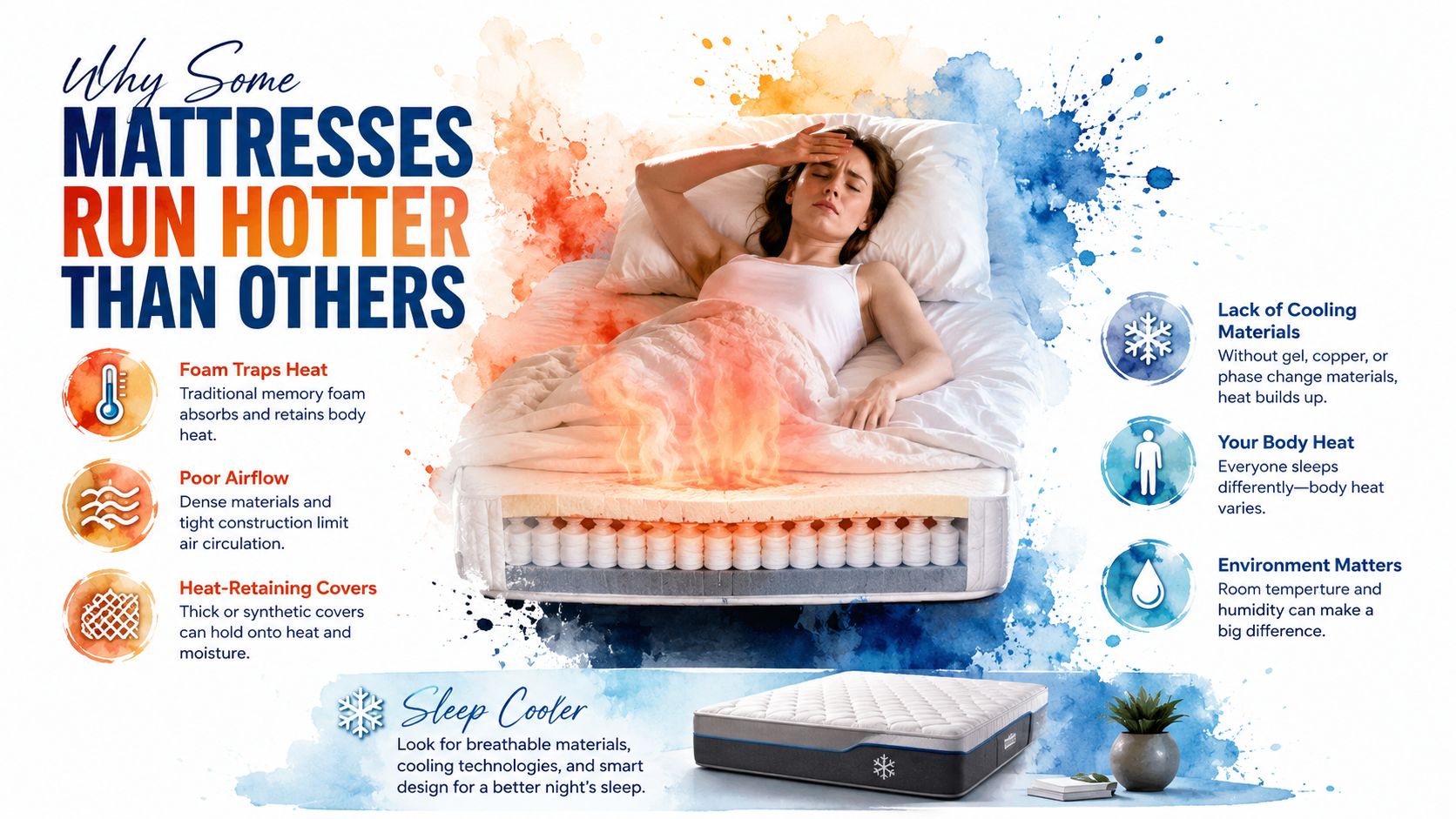
Why Some Mattresses Run Hotter Than Others
Three factors usually turn a mattress into a heat trap: body heat, restricted airflow, and a sealed cover. Understanding those levers makes mattress shopping much more practical than relying on a cool-to-the-touch showroom impression.
First, the body radiates heat downward. If the upper comfort layers compress closely around the sleeper, heat collects in the contact zone. A mattress with generous contour can feel comfortable at bedtime, yet the same close embrace may limit air movement later in the night.
Density changes the airflow path
Traditional memory foam is the usual concern because dense foam can absorb and retain warmth. The material conforms closely, which helps with pressure relief and motion isolation, but that close contact can reduce the open space around the body.
Latex, ventilated foam, and coil systems generally give heat more room to move. Latex has a responsive, buoyant feel, while coils create air channels beneath the comfort layers. A hybrid uses those coils with foam or latex above them, giving sleepers pressure relief without placing the entire body on a dense block of foam.
The cover acts like the mattress's outer climate layer. A tightly woven cover with warm synthetic batting can behave like a lid. Cotton, Tencel, viscose derived from bamboo, and other breathable fabrics allow heat and moisture to move away from the surface more effectively. Phase-change materials can also help manage heat, but their value depends on how the entire mattress handles warmth after the initial cool sensation fades.
Look beyond the label
A useful resource for shoppers sorting through construction details is this guide to the best mattress for hot sleepers. The important takeaway is simple: heat needs somewhere to go. A breathable cover can help, but it can't turn a compressive, poorly ventilated core into a cool sleep system.
Independent testing reflects that reality. One testing method places a thermocouple under body weight, heats the mattress surface to 30°C, and tracks the temperature every minute for 10 minutes. Another uses a heat pad cooled from 50°C under the same load, allowing testers to compare how quickly a mattress releases stored heat under repeatable conditions. See the independent mattress cooling methodology.
Comparing Mattress Types for Hot Sleepers
The construction matters more than a colorful cooling badge. Four categories cover most of the choices hot sleepers will encounter: memory foam, latex, hybrid, and innerspring.
| Construction | Cooling Performance | Contour & Pressure Relief | Motion Isolation | Typical Price Tier |
|---|---|---|---|---|
| Memory foam | Fair, better with open-cell or ventilated layers | Excellent contour | Excellent | Mid to premium |
| Latex | Good to very good | Good pressure relief with a buoyant feel | Moderate | Premium |
| Hybrid | Very good when the coil system is open and well ventilated | Very good | Good to very good | Mid to premium |
| Innerspring | Very good traditional airflow | Limited to moderate contour | Moderate to limited | Entry to mid |
Memory foam
Memory foam remains the strongest choice for deep contour and motion isolation. It can cushion the shoulders and hips while limiting movement across the bed. The cost is thermal behavior. Dense, traditional foam may trap warmth unless the mattress uses ventilation, open-cell construction, or another serious approach to heat management.
This category suits sleepers who prioritize contour above all else and don't mind a warmer feel. Hot sleepers should avoid judging it only by the first few minutes in a showroom. The overnight question is whether the surface continues to release heat after the body has settled into it.
Latex
Latex feels springy rather than enveloping. That buoyancy keeps the sleeper closer to the top of the mattress, while the material's open structure can support better airflow than dense traditional memory foam. Sleepers who dislike the stuck-in-bed feeling often appreciate this responsiveness.
Latex can feel heavier to move and may sit at a higher price tier. It also offers less motion isolation than memory foam, so couples should test how much movement reaches the other side.
Hybrid
For most hot sleepers who still want cushioning, a hybrid is the practical sweet spot. Coils create a ventilated support core, while foam or latex in the comfort layer reduces pressure at the shoulders and hips. The result is a more balanced feel, with airflow beneath the sleeper and enough contour for side and combination positions.
The trade-off is construction complexity. A hybrid can vary widely depending on the thickness, density, and ventilation of its comfort layers. Shoppers comparing models can browse mattresses to see how different constructions approach support and comfort. A deeper materials comparison is also available in this guide to memory foam versus latex mattresses.
Innerspring
Innerspring mattresses offer the most traditional airflow and the most bounce. Their open support structure can suit sleepers who want to remain on top of the bed rather than sink into it. They're often the coolest choice for someone who values ventilation more than contour.
The limitation is pressure relief. A basic innerspring may not cushion side-sleeping shoulders and hips enough, so the cover, padding, and comfort layers still deserve close testing.
Cooling Technologies Worth Your Money
Cooling technology deserves scrutiny because not every feature changes overnight comfort. Some materials create an appealing first impression but have little influence once the mattress has absorbed body heat. The strongest designs manage the whole surface and core rather than adding one cooling ingredient to dense foam.
| Technology | How It Works | Realistic Cooling Effect | Worth It? |
|---|---|---|---|
| Gel infusion | Disperses heat through gel particles in foam | May improve initial surface feel, but overnight performance varies | Sometimes |
| Graphite infusion | Uses conductive particles intended to move heat through foam | Depends heavily on the foam structure and ventilation | Sometimes |
| Copper infusion | Adds conductive material to the foam formulation | May support heat transfer, though construction matters more | Secondary feature |
| Phase-change material | Absorbs and releases heat as the surface warms and cools | More useful for managing fluctuations than creating permanent cold | Often, when paired with airflow |
| Breathable knit or Tencel cover | Allows more air and heat movement at the surface | Helps the cover avoid sealing in warmth | Usually worthwhile |
| Coil airflow | Creates open channels beneath the comfort layers | Supports cooling throughout the night | One of the strongest priorities |
Gel and graphite can help a foam mattress feel less stagnant, but the effect depends on what surrounds the infusion. A gel bead in dense foam still sits inside dense foam. Copper has a similar limitation. These features can be useful supporting details, not a substitute for ventilation.
Surface management versus overnight performance
Phase-change material has a clearer job. It absorbs heat as the surface warms and releases it as conditions change. That makes it more relevant than a brief cool sensation, although it still works best when the mattress can move heat away rather than just redistribute it.
Breathable knit fabrics and Tencel covers address the first layer of the problem. They can reduce the sealed-in feeling at the surface and work well with breathable sheets. Coil airflow addresses the deeper problem by creating space beneath the comfort layers.
A recent testing framework gives cooling performance more weight over the full night than at bedtime. It assigns 40% of the cooling score to energy transferred during the first hour and 60% to energy transferred over 8 hours. Review the full cooling test framework. That approach matches the experience of hot sleepers, who need heat control after the initial cool touch has disappeared.
The evidence also points to a broader conclusion. Active water-circulating and dynamic temperature systems produce the most consistent surface-temperature reductions, but objective sleep-architecture gains remain inconsistent and often modest even when users report feeling cooler and sleeping better. Explore the science of cooling mattress technology.
For a shopper seeking a durable investment, the priority order is clear: coil or latex airflow first, breathable cover second, and specialty infusions only when they support the underlying construction. A dedicated memory foam mattress guide can help shoppers decide whether a foam-based feel is worth the additional cooling requirements.
Matching Firmness and Feel to Your Sleep Style
Cooling doesn't excuse poor support. A mattress that keeps the surface comfortable but lets the spine twist, shoulders jam, or hips sink too far will still produce restless sleep. Firmness should follow sleep position and pressure distribution, while cooling features should be evaluated at the cover and support-core level.
Side sleepers
Side sleepers usually need enough cushioning for the shoulders and hips. A plush or medium feel may reduce pressure for a lighter sleeper, while a medium-firm hybrid can offer a more stable balance for someone who changes positions or carries more weight through the hips.
The surface should allow pressure relief without wrapping too tightly around the torso. Latex and responsive hybrid designs often make that balance easier because they cushion without the same deep sink associated with dense memory foam.
Back sleepers
Back sleepers need support beneath the lumbar area and enough surface cushioning to avoid hard pressure at the shoulders. Medium-firm through firm designs can work, depending on body shape and how much contour the sleeper prefers.
A responsive surface can also make turning easier. That matters for hot sleepers because repeated effort to escape a warm depression can disturb the night as much as the heat itself.
Stomach and combination sleepers
Stomach sleepers generally need a firmer, more supportive surface to reduce hip sinkage. A firm hybrid or latex mattress often suits this position better than a thick, soft foam bed.
Combination sleepers need a compromise. A medium-firm hybrid with responsive comfort layers can provide pressure relief on the side while staying supportive on the back and stomach. The mattress firmness guide offers a useful framework for evaluating those trade-offs.
Body size changes the result. A 110-pound side sleeper may need more surface cushioning to engage the comfort layers, while a 230-pound back sleeper may compress the same mattress much farther and need firmer support. The cooling lesson is practical: excessive sinkage reduces open space around the body, so the correct firmness can improve both alignment and airflow.
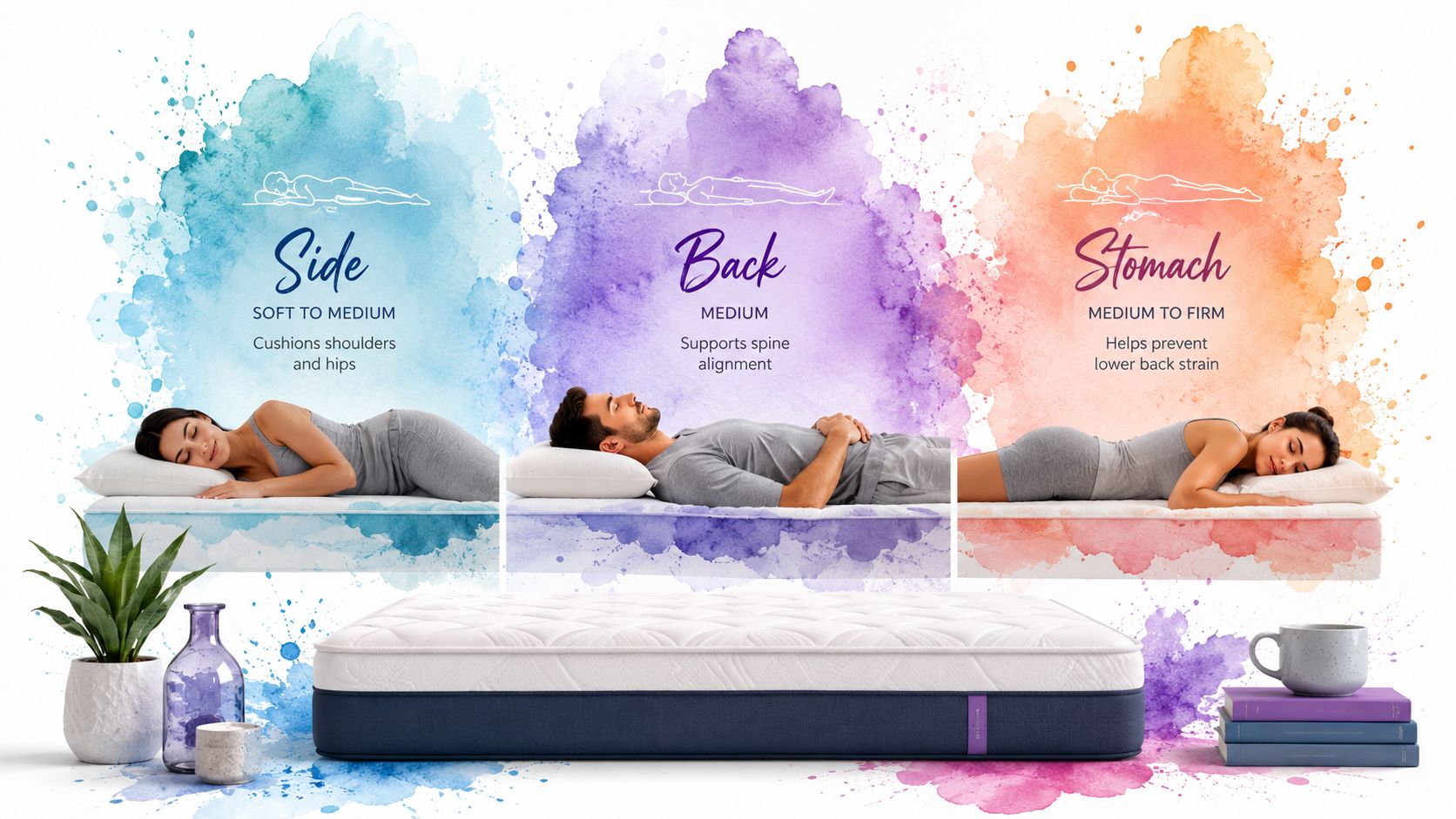
Decision rule: Prioritize cooling at the cover and coil level. Choose firmness according to sleeping position, body shape, and pressure relief.
Building the Cool Sleep Microclimate
A mattress can't control the entire night by itself. The most reliable setup treats the bed as a small climate system with four connected layers: the mattress, the base, the bedding, and the room.
An adjustable base can change how the body meets the mattress. A head-adjusted or zero-gravity position may reduce the compressed feeling around the torso and create more opportunity for air movement beneath the sleeper. It can also change pressure distribution, which helps a responsive mattress do its job without forcing the body deep into the comfort layers.
Bedding should cooperate with the mattress
Cotton percale, Tencel, and lightweight wool can complement a breathable mattress. Their value comes from how they handle airflow and heat at the surface, not from a “cooling” name alone. A heavy, tightly packed layer can undermine the ventilation built into the mattress below.
A careful comparison of sheets for hot sleepers can help shoppers evaluate fabric, weave, and feel before adding bedding to the system. The same principle applies to protectors and toppers. Every additional layer should be checked for breathability, because a waterproof or heavily padded barrier can create a warmer surface.
Room conditions still matter. A bedroom that feels warm or humid makes every mattress work harder, while a ceiling fan can improve air circulation across the room and around exposed bedding. Giorgi Bros. also provides practical guidance on how to sleep cooler at night for shoppers refining the surrounding setup.
Build for the long term
A mattress, base, and bedding system should remain useful as preferences change. An adjustable base can support different positions, while a durable mattress with replaceable or adaptable accessories can reduce the pressure to replace the whole setup whenever the room or sleep habits change.
That's the sustainability advantage of a buy-it-for-life mindset. Quality Premium Mattresses and well-made bedroom pieces cost more attention at the start, but they can reduce waste and replacement costs over time. The goal isn't to chase every new cooling feature. It's to build a system that still makes sense years after the marketing language has changed.
Sleep Trials, Warranties, and Financing
A sleep trial is the practical protection layer of an investment-grade mattress. A genuine in-home trial should give the sleeper enough time to evaluate comfort in the actual bedroom, including nights when the room feels warmer and nights when the body needs a different position.
Many shoppers look for a trial of at least 90 nights, a comfort exchange after a break-in period, and pickup support if the mattress doesn't work. The exact terms vary, so the policy deserves the same attention as the materials.
Read the fine print before signing
| Brand | Sleep Trial | Exchange Policy | Warranty Term | Warranty Type |
|---|---|---|---|---|
| Brand-specific policy | Confirm the exact in-home period | Check break-in and exchange rules | Confirm stated term | Prorated or non-prorated |
| Retailer policy | May differ from manufacturer terms | May include fees or restrictions | May supplement the manufacturer | Retailer-added or manufacturer |
| Custom-order policy | Confirm before purchase | May have separate conditions | Review written coverage | Varies by construction |
The details that surprise buyers are usually practical: required adjustment windows, photo documentation for stains or damage, return shipping fees, and whether coverage becomes prorated over time. A manufacturer warranty may cover structural defects, while a retailer protection plan may address different forms of damage. Neither should be treated as a general comfort guarantee.
The meaningful questions concern body impressions, coil sag, exclusions, and the difference between prorated and non-prorated coverage. A warranty that looks long on paper may provide less value later if the buyer must pay an increasing share of replacement costs.
Financing needs equal clarity
Financing can make an investment piece easier to budget, but the repayment schedule matters. 0% short-term promotions and longer-term installment plans carry different obligations, and eligibility for a sleep trial should be confirmed when a purchase is financed. Giorgi Bros. lists financing options are available, and shoppers can review its furniture and mattress services while asking how returns, exchanges, and financed balances interact.
A non-commission consultation should make those terms easy to understand before payment. Clear paperwork protects the buyer and keeps the focus on choosing a mattress that supports years of comfortable use.
Rest the Mattress Before You Rest on It
Online specifications can describe foam, latex, coils, and cover fabrics, but they can't tell every sleeper how the bed feels beneath the shoulders or whether the lumbar area receives enough support. A 10-minute showroom lay-down can reveal pressure relief, edge stability, firmness, ease of movement, and the surface temperature in a way a product page cannot.
Hot sleepers should test more than the first cool sensation. The body should remain supported without sinking into a deep pocket, and the cover should feel breathable rather than sealed. Couples should also test whether one person's movement travels across the surface.
A dedicated sleep gallery gives shoppers space to compare constructions without pressure. Design Experts can explain cooling layers, firmness pairing, base compatibility, and sleep-trial logistics, while Non-Commission Sales Staff can keep the conversation educational instead of transactional. That approach suits a long-term purchase, especially for Bay Area homeowners building a bedroom around durable materials and thoughtful Bay Area Interior Design.
Giorgi Bros. Furniture is part of a 50,000-square-foot South San Francisco showroom offering bedroom furnishings, Premium Mattresses, adjustable bases, custom-order services, fabrics, leathers, wood species, and finishes. The wider collection also includes Custom Furniture and Amish Furniture, so a mattress purchase can fit into a durable whole-home plan rather than becoming a short-term replacement.
The right next step isn't another hour of scrolling. It's testing the mattress in person, asking direct questions, and choosing the construction that supports both cooler sleep and long-term value.
Giorgi Bros. Furniture offers Premium Mattresses, adjustable bases, Custom Furniture, and no-pressure guidance from non-commission Design Experts. Visit Giorgi Bros. Furniture in South San Francisco to test cooling constructions in person or book a Design Consultation for a bedroom investment built to last.