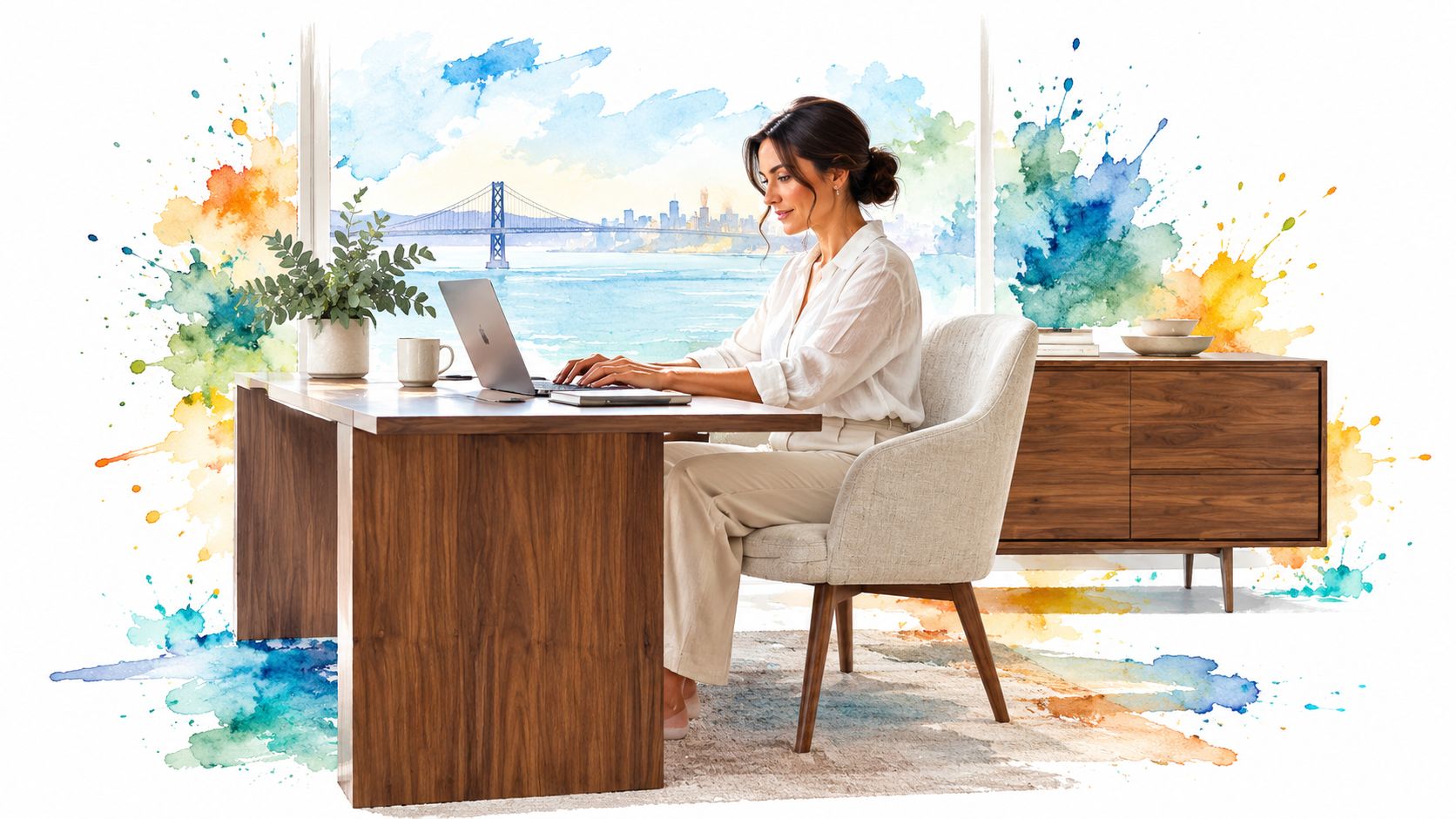
A Bay Area homeowner may be answering emails at the dining table before breakfast, moving a laptop aside for dinner, then working from a sofa because the spare room has become a guest room. That arrangement can function temporarily, but it rarely supports comfortable posture or gives the home a settled, intentional look. The right home office contemporary furniture should serve the workday without making a living area feel like a corporate cubicle.
Contemporary design is especially useful in shared spaces because it combines clean profiles, warm materials, and practical storage. A well-chosen desk can look residential from the living room, while an adjustable chair and properly aligned monitor can support focused work. For households furnishing a dedicated office, the same principles create a room that can adapt as schedules, technology, and storage needs change.
Why Contemporary Style Works So Well for the Modern Home Office
Consider a typical South San Francisco apartment. One corner of the living room holds a desk, another accommodates dining, and the entire space remains visible from the entry. A bulky executive suite would dominate the room. A narrow writing desk may look attractive but leave the user balancing a laptop at the wrong height. Contemporary furniture solves the visual problem with lighter proportions, while thoughtful customization and ergonomic features solve the practical one.
The appeal goes beyond appearance. The home office furniture market reached USD 38.40 billion in 2025, according to a 2026 industry estimate for the home office furniture market, which projects USD 41.21 billion in 2026 and USD 58.63 billion by 2031, a 7.31% CAGR. A separate estimate placed the market at USD 36.86 billion in 2025 and forecasts USD 55.36 billion by 2030, with an 8.4% CAGR, reflecting continued demand for desks, chairs, and storage systems.
Residential looks with working strength
The strongest contemporary pieces borrow durability from commercial furniture but retain the warmth of residential design. This approach is often called resimercial design, a blend of workplace performance and home-friendly character. Warm wood, textured upholstery, concealed cable management, and storage that resembles built-in cabinetry help the office belong to the room rather than compete with it.
A contemporary desk also leaves more room for flexibility. It can support a laptop during the week, serve as a writing surface on the weekend, and remain visually calm when work is put away. Readers comparing silhouettes and materials can explore contemporary furniture styles before deciding which direction suits the home.
Giorgi Bros. Furniture has served South San Francisco for more than 90 years, beginning in 1933. Its family-owned, non-commission approach fits this kind of decision. A design consultant can help a homeowner weigh scale, comfort, and finish without turning a practical furniture choice into a pressured transaction.
Planning Your Space Before You Shop
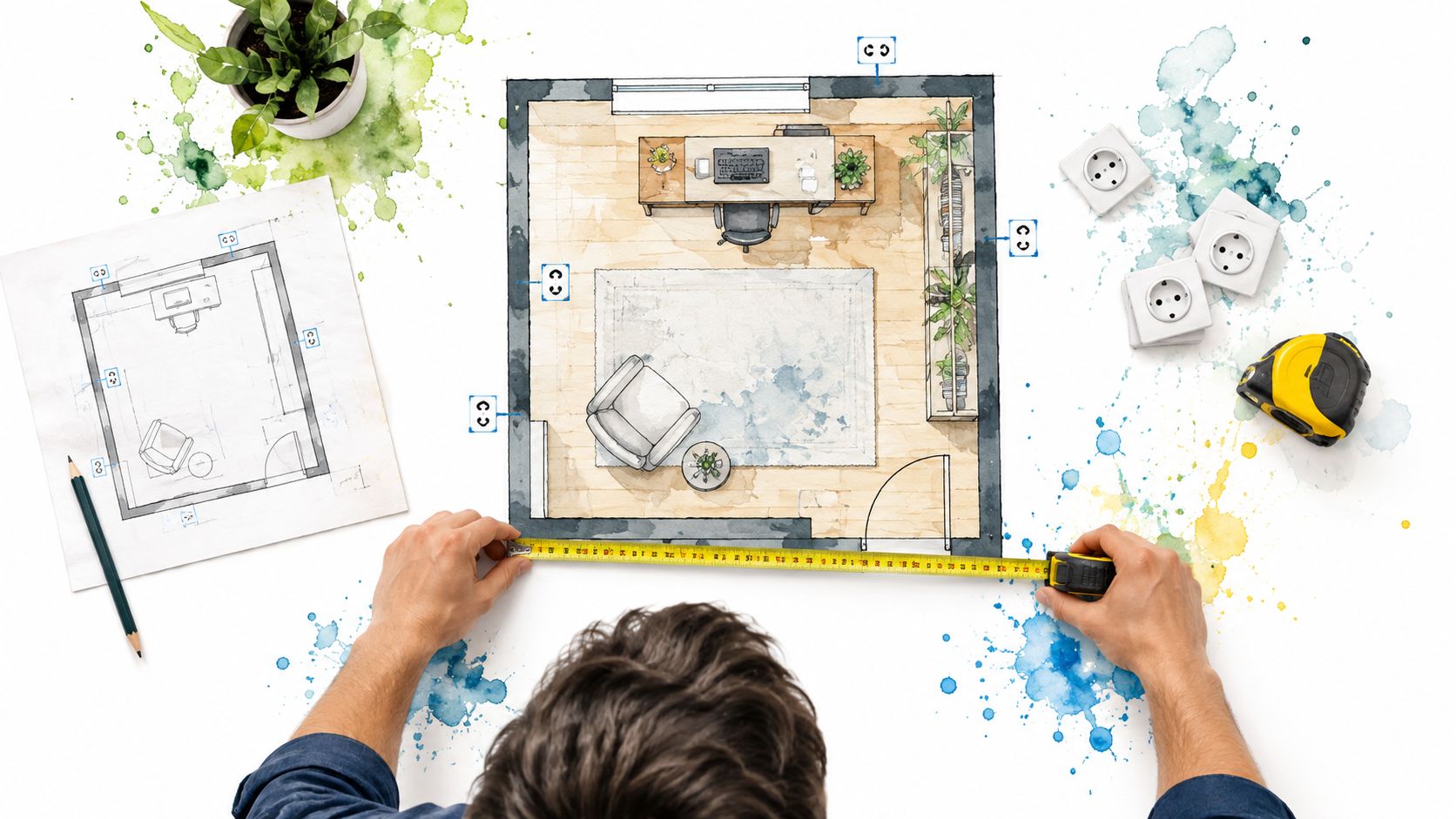
Furniture decisions improve when the room gets measured before the shopping begins. Start by recording the room's length and width, then note doors, windows, outlets, vents, and the direction of natural light. Measure the proposed desk wall and the route from the entrance to the work area. A beautiful desk that can't pass through a stairwell or leaves a door blocked isn't a good investment.
Shared rooms need a second layer of planning. Identify the point where work begins and ends, then decide how equipment will disappear afterward. A writing desk with a drawer may be enough for occasional use. A household with a monitor, documents, chargers, and office supplies may need closed storage or a modular system that keeps visual clutter contained.
A practical afternoon audit
Use this sequence before visiting a showroom:
-
Track the routine: Write down the tasks performed at the desk, including video calls, writing, reading, and equipment use. The list reveals whether the setup needs a broad surface, stronger cable organization, or a second work zone.
-
Map the footprint: Mark the desk and chair with painter's tape or cardboard. Include the chair's pulled-back position, not only the desk's dimensions. This test shows whether the user can move comfortably without narrowing the room's main path.
-
Locate power and light: Note where outlets sit and whether daylight creates screen glare. A desk may look best near a window, but the best work position might place the screen perpendicular to the light.
-
Plan the transition: Decide where the laptop, papers, and chair go after work. In a dining area, a compact desk or storage cabinet may preserve the table for meals. In a living room, a finish that relates to nearby wood tones can make the office feel integrated.
-
Allow for change: Consider hybrid schedules, guests, children, and future equipment. Modular storage and adjustable components generally adapt better than a highly specialized arrangement.
Practical rule: Measure the furniture zone and the movement around it. The empty space is part of the layout.
Research confirms why this preparation matters. One academic study found that homeworkers often used a living area, a dining table, or a dining chair instead of a dedicated office, with the living area used by 32.8%, dining tables by 40.9%, and dining chairs by 34.1% of participants in that study. Those findings support choosing contemporary pieces designed to coexist with the rest of the home, not assuming every worker has a separate office.
For compact rooms, small-space furniture guidance can help translate measurements into practical choices. The objective isn't to fill every available inch. It's to create a clear work position that can coexist with daily life.
Choosing Contemporary Desks Storage and Seating That Fit Your Life
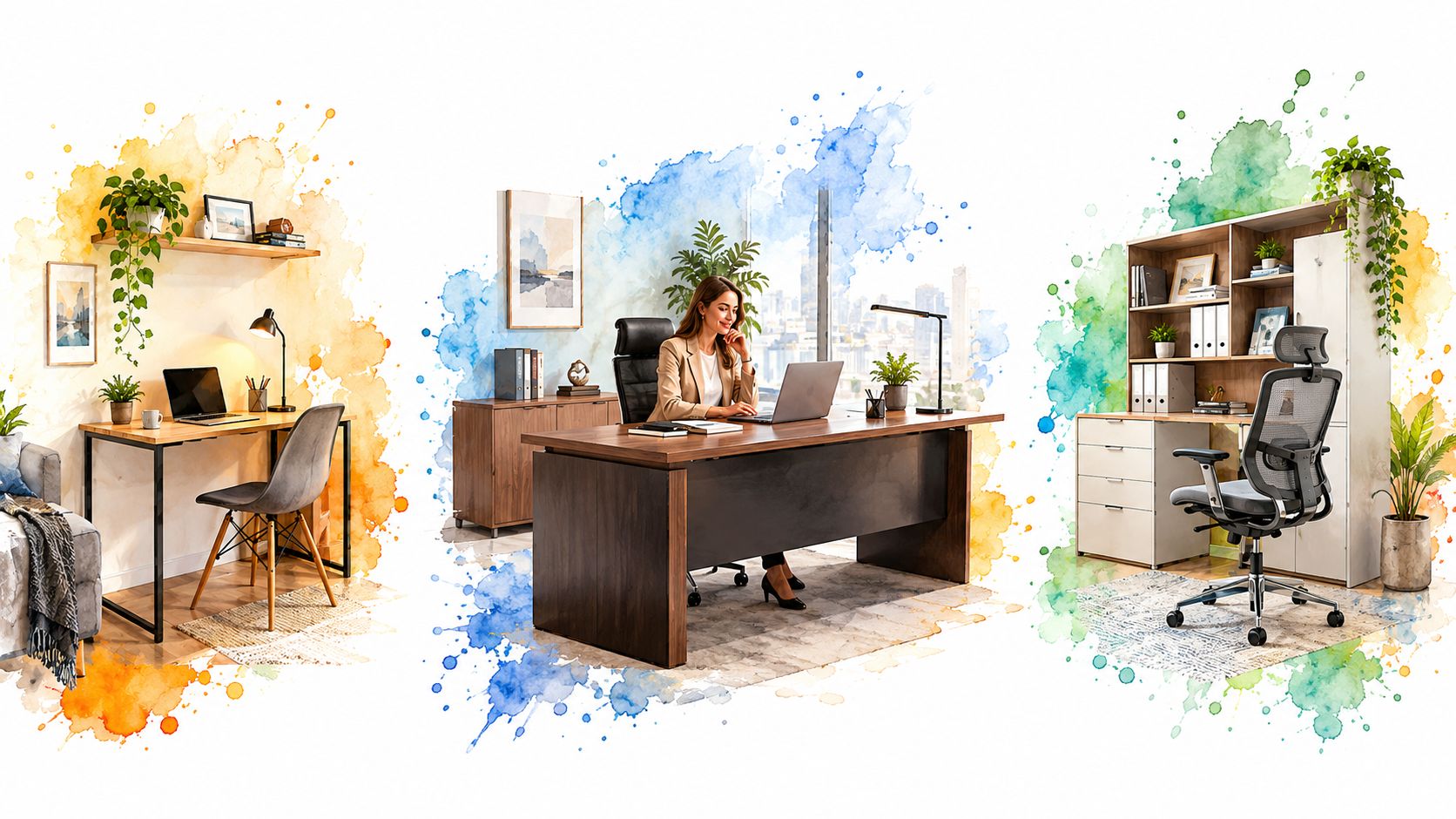
The best combination depends on how the room works, not on whether a piece looks impressive on a showroom floor. A compact writing desk, a broad executive desk, and a modular workstation each solve a different problem. The right choice balances surface area, posture, storage, and visual weight.
Match the desk to the room
A compact writing desk suits an apartment or a living room corner where the office must remain visually quiet. Its advantage is proportion. It doesn't overwhelm nearby seating or dining furniture, and it can often double as a writing or study surface. The tradeoff is limited room for a large monitor, paperwork, and multiple devices.
An executive desk makes more sense in a dedicated office. It provides generous surface area and often carries a stronger architectural presence. That presence can anchor a room, but it needs adequate clearance and may look out of place in a shared living area.
An adjustable or lift-top desk offers a useful middle ground. It can support different working positions and accommodate changing users, while a contemporary finish keeps the mechanism from becoming the dominant visual feature. For shoppers interested in domestic craftsmanship and practical office pieces, American-made office furniture offers a useful direction for comparison.
Storage should reduce visual noise
Open shelving displays books and objects, but closed drawers and doors hide the items that make a workspace look unfinished. A low credenza can separate an office zone from a living area without creating a wall. Tall modular storage uses vertical space in a dedicated room, while a narrow cabinet can hold supplies near a dining table without claiming the entire room.
Seating deserves equal attention. A dining chair may fit the room visually, but it usually lacks the adjustability and support needed for extended desk work. A supportive task chair should allow the user to set seat height, maintain a stable back position, and keep the arms and shoulders relaxed. Contemporary upholstery, wood accents, and restrained proportions can make that chair feel like part of the home rather than a piece of institutional equipment.
A smaller desk with the right chair and storage usually serves a shared room better than a large desk that forces every other activity around it.
Giorgi Bros. Furniture's 50,000-square-foot showroom gives shoppers a place to compare desks, storage, chairs, and finishes in person. Testing a chair, opening drawers, and viewing a desk from across the room reveal qualities that photographs can't show.
Ergonomics and Comfort Without Compromising Style
A beautiful desk can still create an uncomfortable workday if its height, depth, and screen position don't fit the user. Laptop-only work is a common example. The screen sits low, the keyboard stays attached, and the user often rounds the neck and shoulders to see clearly. A dining chair may add a second problem because it usually lacks the support and adjustment needed for sustained desk work.
A clinical review of 41 home-office ergonomic evaluations identified recurring problems involving laptop use, nonadjustable chairs without armrests, low monitor heights, and hard desk surfaces. A CDC-linked assessment reported that over 40% of participants experienced moderate to severe discomfort, including severe low- or middle-back pain and discomfort affecting the neck, eyes, head, or shoulders. These findings make ergonomics a furniture requirement, not an optional upgrade. The ergonomic furniture design guide provides a useful starting point for evaluating supportive forms.
Build a neutral working position
A motion-capture study compared a typical home setup with an ergonomically optimized workstation using 20 adults completing two 20-minute tasks, text writing and questionnaire editing. The home setup created significantly higher ergonomic risk at the neck and right wrist, while adjustments that supported neutral joint angles and corrected monitor and keyboard alignment reduced that risk. The motion-capture comparison explains why a dining table, dining chair, and laptop can look harmless but perform poorly as a complete workstation.
A practical setup usually includes:
- Screen alignment: Raise the monitor so the user can look ahead without continually bending the neck.
- Keyboard separation: An external keyboard lets the screen and hands occupy more suitable positions.
- Chair adjustment: Set the seat so feet rest securely and shoulders stay relaxed while typing.
- Desk depth: Leave enough room for the screen and keyboard without forcing the user to reach.
- Surface comfort: Choose a desk edge and work surface that don't create pressure during regular use.
A 2026 retrospective survey of Danish work-from-home employees associated adjustable desks, adjustable chairs, and ergonomics training with significantly greater odds of improved comfort. The same survey linked ergonomics training combined with an external keyboard and adjustable desk to improved productivity, as reported in the PubMed record for the Danish work-from-home survey.
Design doesn't need to disappear for comfort. A wood desk with a refined edge, a supportive upholstered chair, and concealed technology can look residential while allowing the body to work in a more neutral position. Non-commission consultants can help shoppers test those details in person instead of judging comfort by appearance alone.
Finishes Materials and Customization That Make It Yours
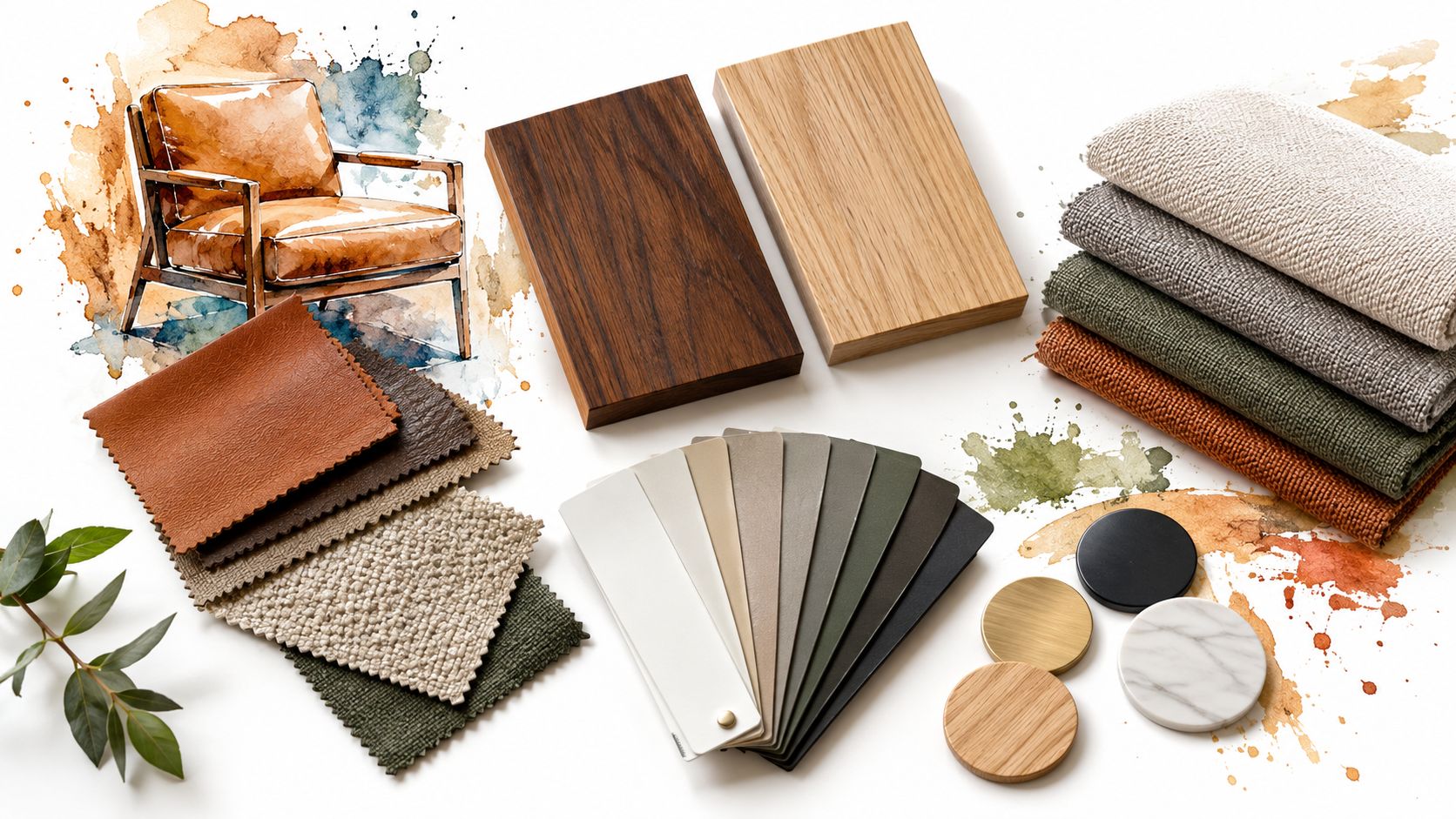
Customization turns a coordinated room into a durable investment. Wood species establish color, grain, and character. Finishes affect sheen and protection. Upholstery influences touch, support, and how naturally a chair or guest seat fits the surrounding room.
Custom furniture guidance identifies cherry, walnut, quartersawn white oak, and hard maple as common wood species, with finish options including natural oil, catalyzed lacquer, and conversion varnish. Leather and fabric provide different tactile and visual effects for seating. These choices matter because the desk and chair receive daily contact, while their appearance must also work with the room's existing furnishings.
Choose materials for the life of the room
Hardwoods intended for interiors should be kiln-dried to about 8% to 12% moisture content and acclimatized to the destination climate before machining, according to a technical guide to furniture materials and finishes. That preparation supports stable construction in changing environments. The same guide describes full-grain leather as the strongest and most breathable leather type because it retains the hide's natural surface.
Giorgi Bros. Furniture offers custom order services that include wood species, finishes, leathers, and designer fabrics. That flexibility lets a homeowner match a desk to existing floors, specify a chair that relates to nearby seating, or adjust scale for a narrow Bay Area room. A consultation with ASID design professionals can also help resolve details such as storage proportions, color balance, and the relationship between the office zone and the rest of the home.
Buy for the room's full lifespan
A disposable desk may solve an immediate problem, but replacing it when the finish fails or the household changes creates more cost and waste. A well-made custom piece can move from a dedicated office to a living room, guest room, or another home. Repairable construction and replaceable upholstery extend that useful life further.
That is the practical sustainability argument for buy-it-for-life furniture. Quality is not only about a refined appearance on delivery day. It's about choosing materials, joinery, and proportions that remain useful as work habits and rooms evolve. The custom wood finishes resource helps shoppers understand how finish selection shapes the final piece.
Bringing Your Contemporary Home Office Together and Next Steps
A successful contemporary office starts with the room rather than the product. Measure the available footprint, identify the daily tasks, and decide how the space should look when work ends. Then choose a desk with enough working depth, storage that controls clutter, and seating that supports neutral posture.
The strongest arrangement usually has a restrained visual palette and one or two distinctive materials. Walnut or oak can add warmth to a living area. A textured fabric can soften a work chair. Closed storage can keep technology out of sight. These decisions make the office feel intentional without requiring a complete redesign.
Comfort deserves a final in-person check. Sit at the chair, adjust the height, test the reach to the desk, and assess the monitor position. Open drawers and doors. Look at the furniture from the room's main entrance. A showroom visit lets shoppers touch surfaces and compare scale before committing to an investment piece.
Delivery is part of the buying decision. White-glove furniture delivery is commonly priced as a location-based service rather than a per-piece fee. Consumer Reports gives an example of a retailer charging a flat rate starting at $199 within 50 miles of its nearest store, while also noting that rates vary widely by retailer and distance in its furniture delivery guidance. Giorgi Bros. Furniture provides location-based flat-rate delivery across most of the Western United States, with a nationwide carrier network for areas beyond its direct delivery zone.
A well-planned home office can improve comfort, preserve the character of a shared room, and remain useful through changing work arrangements. Giorgi Bros. Furniture also offers flexible financing options, allowing qualified shoppers to consider quality materials and custom specifications within a planned household budget. The value comes from buying fewer replacement pieces and keeping the furniture useful for the long term.
Visit Giorgi Bros. Furniture in South San Francisco to test contemporary desks, supportive seating, and storage in person, or book a Design Consultation for help adapting the pieces to a shared Bay Area room. The family-owned team has offered non-commission guidance since 1933, with custom wood, finish, leather, and fabric options for a home office designed to last.