A matte wood finish is a measured low-gloss category, typically 5 gloss units or below at 60°, rather than just a flat looking style. That definition matters because a finish near that level will reflect far less light than broader products also marketed as matte.
A homeowner can hold two samples, both labeled matte, and see one glow softly under showroom light while the other stays almost chalky. That difference is not a trick of the wood. It's a difference in measured reflection, coating build, and how the surface scatters light. For custom furniture that will stay in a Bay Area home for decades, the label alone isn't specific enough.
What a Matte Wood Finish Actually Means
You're comparing two samples for a dining table. The consultant calls both matte, yet one catches the window and the other does not. Trust what you're seeing, then ask for the number behind it.
A gloss meter commonly measures reflection at 60 degrees on a scale from 0, representing no measurable gloss, to 100, representing a mirror-like surface measured gloss definitions for matte finishes. Traditional matte sits at roughly 5 gloss units or below at 60 degrees, while some guides stretch matte to roughly 10 to 15 units, according to that same source. Very low readings below 10 gloss units are often rechecked at 85 degrees because scattered light is harder to resolve at the standard angle, as the same source explains.

Why Two Matte Samples Don't Match
A finish near 4 gloss units generally looks flatter than one near 10 to 15 units, even when both carry the same marketing name, based on the measurement ranges noted earlier. That's the practical gap. The first reads as natural, almost unfinished wood. The second keeps a gentle sheen that shows in grazing daylight.
Practical rule: Ask for the gloss range and the test angle. It's a normal, informed question, not a technical overreach.
The measurement also predicts behavior in the room. Low reflection minimizes glare and softens strong grain contrast. Higher sheen does the opposite and emphasizes highlights. Readers comparing sheen across painted and clear-coated surfaces may also find matte to gloss finishes explained useful background before narrowing samples.
For a Wood Finish Matte decision, start with guidance on the best wood finishes for furniture, then insist on a physical sample. View it flat, tilt it toward daylight, and view it under warm lamp light. A confident choice comes from that sequence, not from a single word printed on the back of a board.
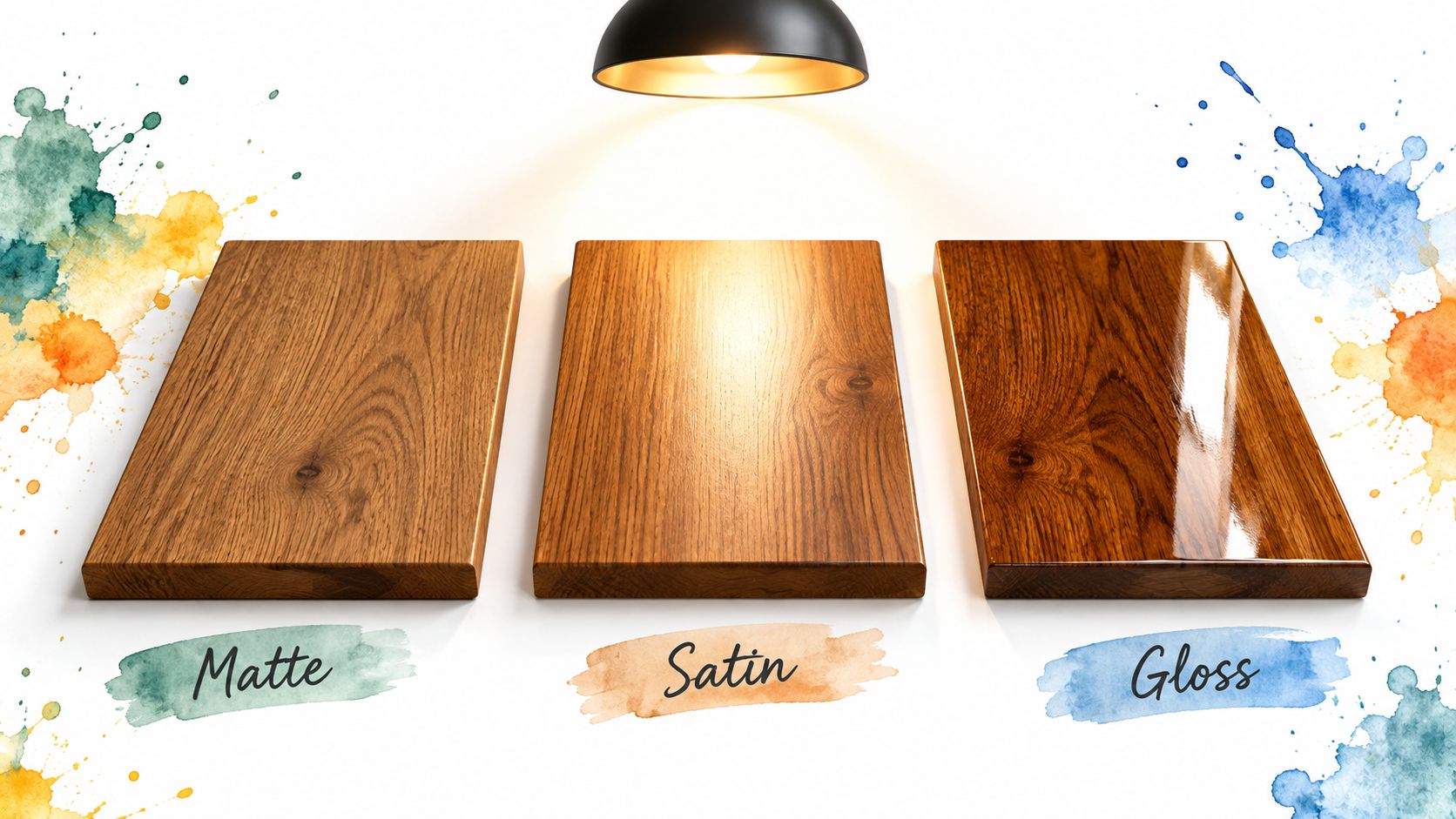
Matte vs Satin vs Gloss Compared
Sheen changes more than shine. It changes how grain reads at breakfast, how fingerprints show after dinner, and how formal a piece feels beside upholstery. The right answer depends on the room's light and the household's tolerance for upkeep.
| Sheen | Typical gloss units at 60° | Light behavior | Shows fingerprints | Best fit |
|---|---|---|---|---|
| Matte | 5 or below, with broader ranges to 10 to 15 in some guides | Scatters light, minimal glare | Low for dust and fine scuffs, though oils can show | Calm, natural rooms and daily use tables |
| Satin | Higher than matte | Soft directional glow | Moderate | Versatile middle ground for mixed lighting |
| Gloss | Highest of the three | Concentrated, mirror leaning reflection | High | Formal, polished, lower traffic pieces |
How Each Sheen Lives in a Room
Matte softens grain contrast. Cathedral patterns in oak look quieter, color looks more even, and the surface feels closer to raw timber. In a south facing Bay Area dining room, that low reflection prevents a tabletop from throwing glare across the room at midday.
Satin keeps some life in the surface. It deepens dark stains better than very flat coatings and gives a gentle highlight along edges and turned legs. For homeowners unsure between flat and polished, satin is usually the safer compromise, especially on darker wood where matte can look slightly muted.
Gloss is a deliberate statement. It sharpens figure, deepens color, and reads formal. It also announces every dust streak, ring, and fine scratch because reflected light makes small interruptions obvious. Choose it when presentation matters more than forgiveness, not as a default.
Touch matters too. Matte often feels drier and more textured because microscopic surface structure scatters light. Satin feels smoother. Gloss feels the most sealed and slick. None of those sensations, by itself, tells you how protective the coating is.
Room by room thinking helps, and how to pick a paint finish offers a useful parallel for matching sheen to light and use. Apply the same discipline to furniture. Bright, busy rooms usually reward matte. Dim, formal rooms can carry more sheen. A household that hates visible smudges should not talk itself into gloss.
Don't choose sheen from a small sample held at chest height. Lay it flat like a tabletop, stand over it, then check it at grazing angle. Furniture is seen from all three positions every day.
Why Matte Can Outperform Sheen Expectations
The common assumption is simple and wrong. Many buyers believe matte means delicate and gloss means tough. Sheen does not determine durability. Coating chemistry, resin system, number of coats, curing, and application quality do.
Technical comparisons report that matte and glossier versions of the same polyurethane can have comparable abrasion, water, and chemical resistance, with sheen changed primarily by light scattering flatting agents technical comparison of matte and satin durability. That distinction should change the conversation in the showroom. Ask what the coating is, not only how flat it looks.
Film Build Can Move the Number
Adding coats can shift appearance. A polymer coatings study found one, two, and three layer matte systems remained at approximately 10 GU or below, while deeper matte systems approached 5 GU, and increasing layer count could shift gloss polymer coatings study on matte layer systems. Additional cured material can level microtexture and change how flatting agents sit near the surface, according to that study.
- Specify the system: Identify coating type, coat count, and cure condition.
- Match the sample: Require a production matched sample, not just the same stain.
- Test the light: Check diffuse room light and grazing daylight before approval.
Matte also hides fine scratches, dust, and scuffs because diffuse reflection breaks up small marks. The trade off is burnishing. Repeated rubbing on a chair arm or desk edge can polish the microtexture into a shiny pathway. The film may still be intact. The appearance has changed, which is why care habits matter later.
Modern low sheen coatings also have a regulatory history. In 1996, California's South Coast Air Quality Management District amended Rule 1136, setting VOC limits generally from 420 to 550 grams per liter for many wood coating categories, effective in stages beginning July 1, 1997 California Rule 1136 regulatory record. The rule pointed toward approximately 275 grams per liter for key applications and identified waterborne, acetone based, and ultraviolet curable technologies as paths to lower emission matte finishes, according to the same record. By a 2003 review, 15.6% of wood coaters were fully compliant with forthcoming limits and 32.0% were partially compliant, per that record.
That history matters for custom furniture buyers reviewing available wood finishes and colors. Matte is not one recipe. It's an outcome that different chemistries reach in different ways, with different curing and maintenance expectations.
Wood Species and Rooms That Suit Matte Best
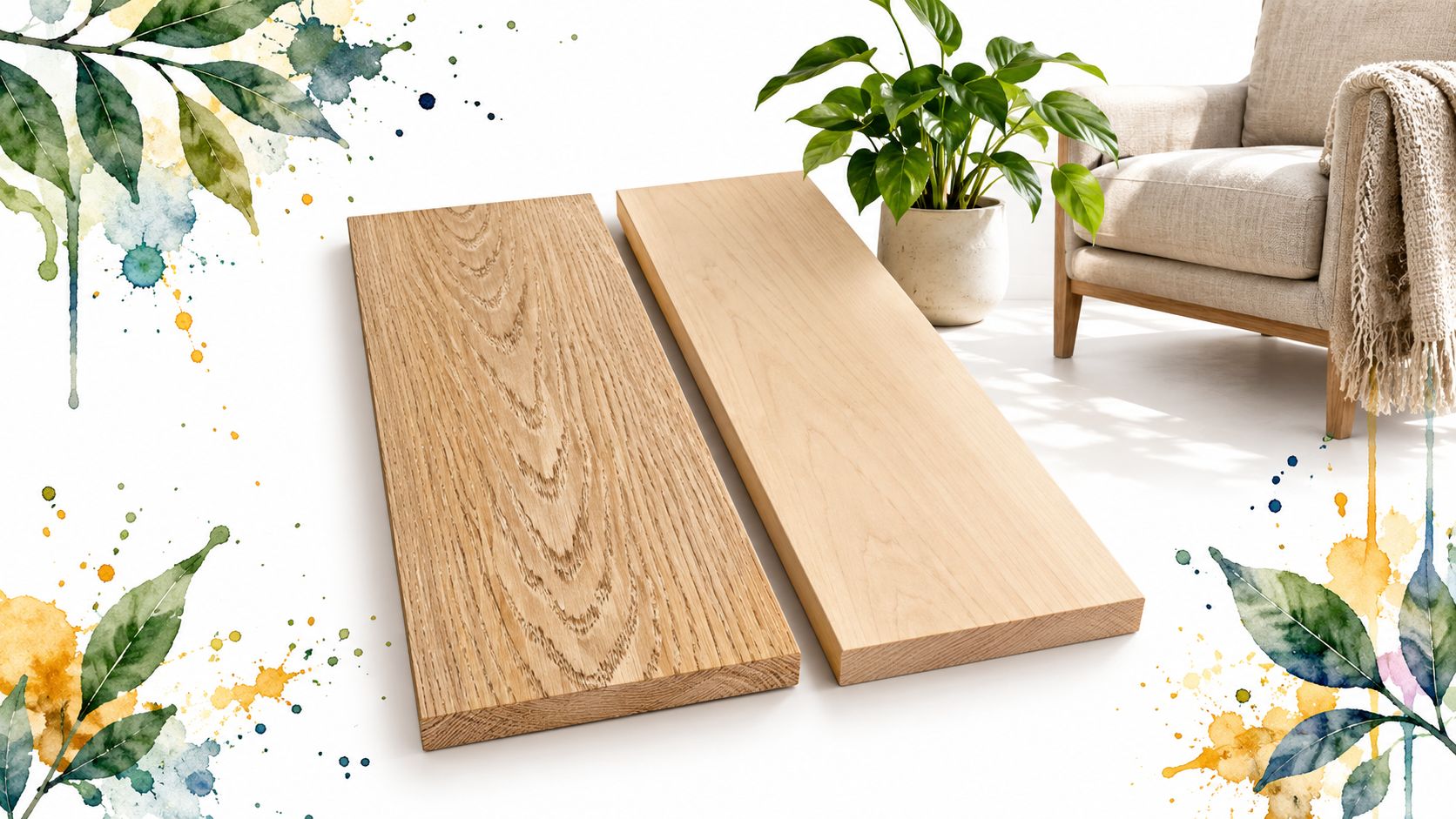
White oak in matte looks calm, architectural, and honest about its grain. Put the same finish on highly figured veneer and the drama drops a notch, which can be exactly right in a living room that already has patterned rugs and art competing for attention. Species and sheen should be chosen together.
Open Grain and Tight Grain Behave Differently
Open grain species such as white oak and ash keep visible texture under low sheen. Matte flatters their pores and growth rings without turning them glossy. Character grade boards with knots and mineral streaks look grounded rather than rustic in a theatrical way.
Tighter grains such as maple and cherry read smoother. On maple, matte keeps the pale color clean and contemporary. On cherry, it softens red tones and lets the wood darken gracefully without a wet look. Dark stained tight grain wood needs a sample check, because very flat clear coats can mute depth on near black colors.
Solid wood Amish Furniture suits this conversation particularly well. Buyers exploring Amish oak, cherry, and hickory options can pair substantial construction with a low reflection finish that lets joinery and grain carry the visual weight. The piece looks built, not coated into submission.
Room Logic That Actually Helps
- Dining rooms: Matte hides daily scuffs and avoids glare under pendants during evening meals.
- Bedrooms: Low reflection keeps case pieces restful beside soft textiles and morning light.
- Home offices: A matte desk reduces reflected glare around screens and task lamps.
- Living rooms: Matte case pieces anchor a calm palette and don't compete with television light.
Bay Area homes often mix strong daylight with open plan sightlines. A matte dining table visible from the kitchen and living room holds its appearance from more angles than a glossy one. That consistency is the design benefit. The finish does not flash bright from one doorway and dull from another.
Choose satin instead when the wood is very dark, the room is dim, or the goal is a more refined, dressed surface. Choose matte when natural texture, low glare, and forgiving daily appearance lead the brief.
Caring for a Matte Finish Without Polishing It Away
Most matte finishes are not ruined by spills. They're changed slowly by enthusiastic cleaning. Oil polishes, vigorous rubbing, and products built to shine high sheen surfaces gradually polish low gloss texture into satin patches.
The Routine That Preserves Low Sheen
Dust with a soft, dry microfiber cloth, lifting rather than grinding particles across the surface. For sticky spots, use a barely damp cloth, clean the smallest area possible, and dry immediately. Don't soak edges, joints, or end grain.
- Skip shine products: Oil based polishes can leave uneven gloss and attract dust.
- Blot, don't scrub: Scrubbing the same spot is how burnishing starts.
- Use coasters and pads: Heat and standing water challenge any coating chemistry.
- Rotate contact points: Move laptop stands, trays, and chargers so friction doesn't polish one pathway.
Water rings need prompt attention. Blot standing moisture, let the area dry fully, and assess before reaching for a repair product. A white mark in the finish is different from dark moisture in the wood, and the fix differs. When in doubt, stop and ask a design expert rather than layering household remedies.
Small scratches often look better on matte than owners expect because diffuse light disguises fine lines. Deeper damage calls for a matte matched touch up or a professional re-coat, not generic polish. Guidance on wood furniture protection helps owners match protection to the specific finish system rather than treating every tabletop alike.
Burnishing is not usually coating failure. It's localized polishing from repeated contact. Chair arms, desk front edges, and the spot where a bag lands every evening are the first places to watch.
Households with children, pets, and rolling laptop bags can absolutely live with matte. They just need felt pads, a landing zone that isn't the best tabletop, and cleaning habits that don't buff. Done right, maintenance is the reason matte keeps looking even for years.
The Buy-It-For-Life Case for Matte
A finish choice looks small at the sample wall. Over decades, it influences whether a table gets refinished, replaced, or handed down. That's where matte belongs in a longer ownership strategy, paired with solid construction and wood that can be repaired.
The U.S. Environmental Protection Agency reported furniture and furnishings produced 12.1 million tons of municipal solid waste in 2018, or 4.1% of total generation, up from 2.2 million tons in 1960 EPA durable goods waste data. At end of life, 80.1% was landfilled and 19.5% was combusted for energy recovery, according to the same EPA source. Wood was the largest material category, per that source.
Longevity Changes the Math
A peer reviewed wood furniture study used a 10 year lifespan requirement and testing that began with a 50 pound load for 24,000 cycles peer reviewed study of wood furniture longevity. Its durable reference chair supported 350 pounds and lasted 173,326 cycles before failure, while the fast furniture comparison supported 250 pounds and lasted 135,823 cycles, according to that study. Stronger construction spreads manufacturing impact over more years of use.
A separate life cycle assessment of an office cabinet found transportation and production of the main wood based raw material were major impact contributors, and reuse, recycling, and energy recovery could produce significant environmental gains life cycle assessment of an office cabinet. The same study described wooden furniture as a potential carbon sink when its life cycle does not emit more greenhouse gases than the materials store.
This is the honest case for Investment Pieces. A piece made to suit the room, the household, and the intended use is less likely to be replaced for looking wrong after two seasons. Matte supports that by aging visually with restraint. Fine wear blends in. The surface can be maintained, repaired, or refinished as part of keeping the whole piece in service.
The same long view applies beyond furniture, which is why practical guidance such as Aqua Painting's cabinet painting advice resonates with homeowners weighing refinish versus replace decisions. At Giorgi Bros. Furniture, custom order services for wood species, fabrics, leathers, and finishes let buyers specify that long view from the start, inside a family owned, Non-Commission consultant environment built around no pressure guidance.
Buying for life is not a slogan. It's fewer replacement cycles, lower lifetime cost per year of use, and furniture kept out of a waste stream that is mostly landfill bound.
Questions Worth Asking in the Showroom
Any finish labeled matte is not automatically the same finish. Bring specific questions and the conversation gets useful fast. A good consultant welcomes them because clear specifications prevent disappointment after delivery.
Under ASTM D523 and related ISO 2813 geometry, gloss meters quantify specular reflection at defined angles, and government architectural specifications commonly define the lowest matte category as no more than 5 gloss units at 60° and 10 GU at 85° gloss measurement standards guidance. That source also supports measuring cured, representative panels at multiple locations to detect uneven sheen.
A Short List Worth Bringing
- What gloss range and angle: Is the target near 5 GU at 60°, and was 85° checked?
- Which coating system: What resin, chemistry, coat count, and cure condition produce this sample?
- Is the sample production matched: Will the ordered piece use the same species, stain, film build, and process?
- How is repair handled: Can burnishing or local damage be spot repaired, or does it require re-coating?
- What cleaning limits apply: Which products raise sheen or damage this specific coating?
Compare two matte samples under the same light, on the same wood species if possible. Then compare the chosen sample on the actual species and stain being ordered. That second step catches most surprises, especially on dark colors.
Buyers planning Custom Furniture can use custom wood furniture making services to frame those questions early, before species and stain are locked. The goal is a written, sample backed specification. Verbal agreement on the word matte is not a specification.
Plan Your Visit to the South San Francisco Showroom
Samples make more sense at full scale. Touch a matte dining table, open drawers on bedroom case pieces, and compare desk surfaces under real lighting before deciding.
Explore 50,000 square feet of inspiration in South San Francisco, where design experts have guided Bay Area households since 1933. That's more than 90 years of family owned service for shoppers seeking Furniture South San Francisco homeowners can test in person, including custom order programs such as Simply Amish, premium living and dining collections, and Premium Mattresses in the sleep gallery.
Book a design consultation for dedicated Bay Area Interior Design guidance, or walk in with measurements, photos, and the question list from the previous section. Consultants work without commission pressure, flexible financing options are available, and white glove delivery uses flat location based pricing across the Western United States rather than per piece fees. Choose the finish carefully, on the right piece, and it pays back for decades rather than seasons.
Bring room photos, measurements, and a short list of finish questions, then compare matte samples on real dining, bedroom, office, and living room pieces with a non-commission design consultant. Visit Giorgi Bros. Furniture to plan a South San Francisco showroom visit or book a design consultation, and choose a wood finish matte specification that's measured, production matched, and built for life.